Building a Low-Waste Future in Monterey County
Waste management is about much more than “throwing things away.” Every product we purchase, use, repair, compost, recycle, or discard has an environmental impact, from the extraction of raw materials to manufacturing, transportation, disposal, and pollution. We encourage individuals, businesses, schools, and local governments to move toward a circular economy.
A sustainable waste management system prioritizes:
- Reducing consumption and unnecessary packaging
- Reusing and repairing products whenever possible
- Recycling materials responsibly
- Composting organic waste
- Designing products for durability and recyclability
- Supporting local and regional circular economies
Why Waste Reduction Matters
Modern landfills generate significant amounts of methane, a potent greenhouse gas that contributes to climate change. Organic materials such as food scraps, yard waste, paper products, and compostable materials release methane when buried in landfills without oxygen.
Diverting waste through composting and food recovery programs is one of the fastest and most effective ways communities can reduce methane emissions. A bonus is that organic waste composting produces nutrient-rich soil, reducing the need for synthetic fertilizers used in agriculture.
Waste Reduction also helps:
- Conserve water and energy
- Reduce air and soil pollution
- Protect oceans and wildlife from plastic pollution
- Reduce demand for resource extraction and manufacturing
- Lower community disposal costs
- Create local green jobs in recycling, repair, composting, and reuse industries
The Waste Management Hierarchy
The best waste is waste that is never created.
Tips for Reducing Waste
- Avoid single-use plastics and disposable products
- Purchase durable, repairable goods
- Buy in bulk when possible
- Choose products with minimal packaging
- Carry reusable shopping bags, water bottles, mugs, and utensils
- Opt out of junk mail and unnecessary subscriptions
- Borrow, share, or rent items used infrequently
Extending the life of products conserves resources and reduces landfill waste.
Reuse Ideas
- Donate clothing, furniture, and household items.
- Shop secondhand.
- Repurpose jars, containers, and materials.
- Participate in tool libraries and community swap events.
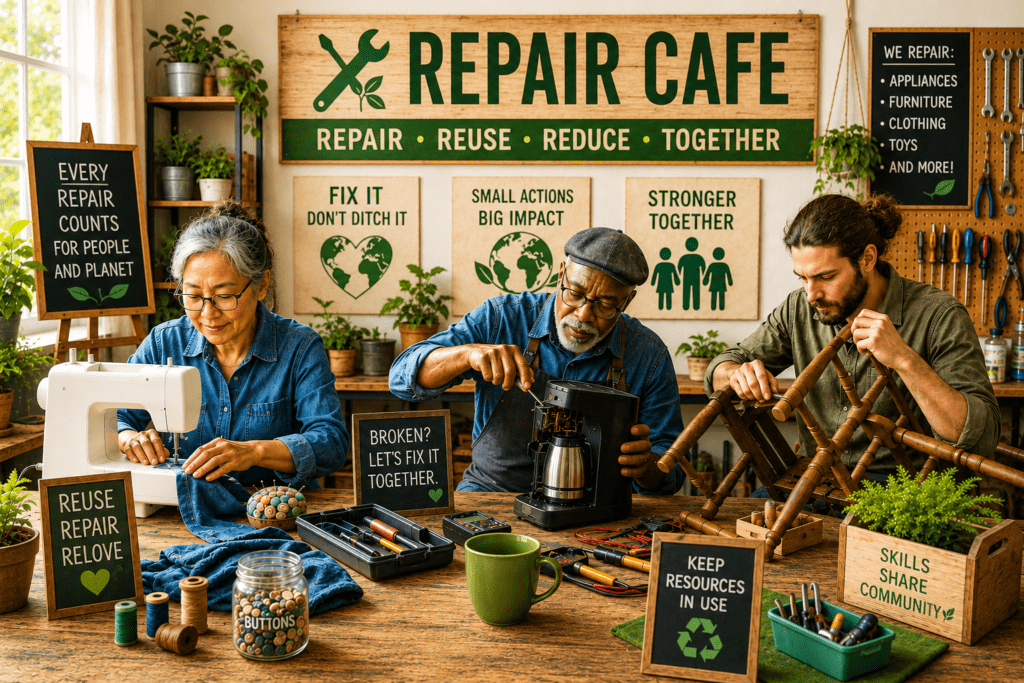
- Support repair cafés and repair businesses’ Right to Repair.
Recycling conserves raw materials and energy, but contamination can reduce effectiveness.
Recycling Tips
- Learn your local recycling guidelines
- Rinse containers before recycling
- Avoid “wish-cycling” (placing non-recyclables in recycling bins)
- Recycle batteries, paint, and electronics at approved facilities
- Purchase products made from recycled materials
Composting transforms food scraps and yard waste into nutrient-rich soil amendments while reducing methane emissions from landfills.
Composting Benefits
- Reduces landfill waste
- Improves soil health and water retention
- Supports healthy gardens and agriculture
- Sequesters carbon in soil
- Reduces the need for synthetic fertilizers
Composting Tips
- Compost fruit and vegetable scraps, coffee grounds, leaves, and yard trimmings
- Avoid meat, dairy, oils, and diseased plants in backyard compost systems
- Use curbside green waste collection programs when available
A circular economy reduces waste by designing systems where materials are continuously reused, repaired, recycled, or composted rather than discarded.
Circular Economy Strategies
- Product redesign for durability and recyclability
- Refillable and reusable packaging systems
- Extended Producer Responsibility (EPR) programs
- Community repair and sharing networks
- Local composting and material recovery infrastructure
- Markets for recycled and reclaimed materials
Plastic pollution harms wildlife, ecosystems, waterways, and human health. Many plastics break down into microplastics that persist in the environment for decades.
Ways to Reduce Plastic Waste
- Use reusable shopping bags and produce bags
- Carry refillable water bottles and food containers
- Avoid plastic utensils, straws, and disposable packaging
- Support refill stations and bulk food stores
- Advocate for local plastic reduction ordinances
Some communities use waste-to-energy technologies to reduce landfill volume and generate electricity or fuel from waste streams.
Potential approaches include:
- Anaerobic digestion of organic waste
- Methane capture from landfills
- Biogas production from agricultural and food waste
These technologies should complement — not replace — efforts to reduce, reuse, recycle, and compost materials upstream.
Additional Areas of Focus
Consider donating edible surplus food to food banks and community organizations before it becomes waste.
Proper recycling of electronics, batteries, and appliances to prevent toxic contamination and recover valuable materials.
Reusing building materials and reducing landfill disposal from construction projects.
Reducing fast fashion consumption, promoting clothing repair, swaps, and textile recycling.
Promoting local policies and infrastructure that aim to divert the vast majority of waste from landfills.
Encouraging businesses, schools, and governments to purchase reusable, recycled-content, and environmentally preferable products.
Neighborhood cleanup events help prevent litter from entering waterways and build community stewardship.
Local Resources
- CalRecycle — California recycling, composting, and zero waste resources
- EPA Sustainable Materials Management
- Regen Monterey Waste Disposal
- StopWaste — Excellent waste reduction and composting education resources
- Ellen MacArthur Foundation — International leader on circular economy principles
- iFixit — Repair guides and right-to-repair advocacy
- Habitat for Humanity Restore Monterey
- Last Chance Mercantile
- Repair Café Foundation
- Loaves, Fishes & Computers — Electronics reuse and refurbishment
- County of Monterey Recycling and Recovery Management Resources
- Regen Monterey – Regional Waste Management
- Salinas Valley Recycles
- Thrift Stores in Monterey County
Every Action Matters
Reducing waste is one of the most practical and immediate ways individuals and communities can help address climate change, conserve natural resources, and protect public health.